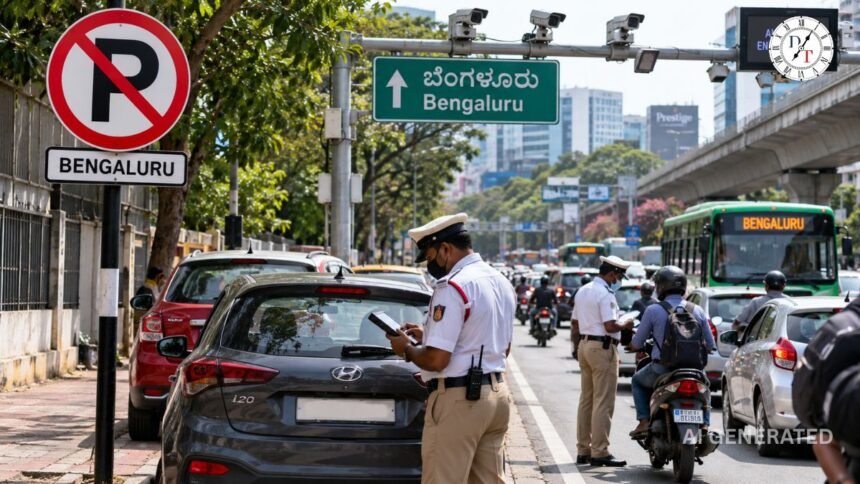
बेंगलुरु: देश की IT राजधानी बेंगलुरु में traffic violations ने 2026 में नया रिकॉर्ड बना दिया है। शहर में साल के सिर्फ पहले आठ महीनों में पांच प्रमुख traffic offences के 24.54 लाख मामले दर्ज किए गए। यह आंकड़ा पिछले पांच वर्षों में इनमें से दर्ज किए गए मामलों के किसी भी पूरे साल के आंकड़े से ज्यादा है।
इन पांच offences में wrong parking, signal jumping, ‘No Entry’ violation, footpath riding और reckless driving शामिल हैं।
छह वर्षों के आंकड़ों को देखें तो इन पांच categories में कुल करीब 1.28 करोड़ violations दर्ज हुए हैं। 2026 में सिर्फ आठ महीनों में दर्ज 24.54 लाख cases इस बात का संकेत हैं कि शहर में traffic-rule enforcement के साथ-साथ violations की संख्या भी बेहद ऊंचे स्तर पर पहुंच गई है। Pasted text
8 महीनों में ही टूटा पांच साल का रिकॉर्ड
उपलब्ध आंकड़ों के मुताबिक इन पांच प्रमुख violations के कुल मामले इस तरह रहे:

| वर्ष | पांच प्रमुख violations |
|---|---|
| 2021 | 19.30 लाख |
| 2022 | — |
| 2023 | — |
| 2024 | — |
| 2025 | 21.09 लाख |
| 2026 (जनवरी-अगस्त) | 24.54 लाख |
सबसे महत्वपूर्ण बात यह है कि 2026 का आंकड़ा अभी पूरे साल का नहीं है। इसके बावजूद यह 2021 से 2025 के प्रत्येक पूरे-year figure से ऊपर पहुंच चुका है।
इसका मतलब यह भी है कि यदि मौजूदा trend साल के बाकी महीनों में जारी रहता है, तो इन पांच categories में annual violations का आंकड़ा और ऊपर जा सकता है। Pasted text
Wrong Parking सबसे बड़ी समस्या
छह साल की अवधि में wrong parking इन पांच offences में सबसे ज्यादा दर्ज होने वाला violation रहा।
इस category में करीब 62.58 लाख cases दर्ज हुए, जो कुल मामलों का लगभग 48.56% है।
2026 के पहले आठ महीनों में ही wrong parking के करीब 10.99 लाख cases दर्ज किए गए।
इसके अलावा करीब 1.16 लाख cases ऐसे vehicles के थे जिन्हें footpaths पर parked पाया गया।
बेंगलुरु जैसे densely populated और rapidly expanding city में illegal parking सिर्फ traffic-rule violation नहीं है। इससे road capacity कम होती है, bottlenecks बढ़ते हैं और pedestrians के लिए उपलब्ध जगह भी घटती है। Pasted text
Signal Jumping दूसरे नंबर पर
छह साल के cumulative data में signal jumping दूसरा सबसे बड़ा offence रहा।
इस category में करीब 46.34 लाख cases दर्ज हुए, जो कुल मामलों का लगभग 35.95% है।
Signal jumping खास तौर पर गंभीर इसलिए है क्योंकि यह सिर्फ congestion नहीं बढ़ाता, बल्कि intersections पर collision का risk भी बढ़ाता है।
2024 में Bengaluru Traffic Police के AI-camera data में भी red-light violations प्रमुख categories में शामिल थे। उस साल AI-enabled cameras ने बड़े पैमाने पर traffic violations capture किए थे। Pasted text
‘No Entry’ के भी लाखों मामले
छह वर्षों में ‘No Entry’ violations के करीब 18.78 लाख cases दर्ज हुए।
यह कुल पांच categories का लगभग 14.57% था।
Wrong parking, signal jumping और No Entry violations को मिलाकर कुल मामलों का 99% से ज्यादा हिस्सा बनता है।
इससे साफ है कि Bengaluru की traffic enforcement challenge का बड़ा हिस्सा relatively common और everyday violations से जुड़ा हुआ है।
Footpath Riding और Reckless Driving
बाकी दो categories की संख्या comparatively कम है, लेकिन उनका road-safety impact काफी गंभीर हो सकता है।
छह साल में:
Footpath riding: 88,328 cases
Reckless driving: 40,362 cases
दर्ज किए गए।
Reckless driving के cases संख्या में कम होने के बावजूद accident risk के लिहाज से महत्वपूर्ण हैं।
इसी तरह footpath riding pedestrians को सीधे खतरे में डालती है और यह संकेत देती है कि कुछ riders congestion से बचने के लिए pedestrian space का इस्तेमाल करते हैं।
क्या सिर्फ Traffic Violations बढ़े हैं या Enforcement भी बेहतर हुआ है?
यह सबसे महत्वपूर्ण सवालों में से एक है।
Karnataka के Director General and Inspector General of Police M A Saleem के अनुसार violations में बढ़ोतरी को सिर्फ motorists की indiscipline से नहीं समझा जा सकता। बेहतर enforcement capabilities भी ज्यादा cases detect होने की एक वजह हैं।
Bengaluru Traffic Police पिछले कुछ वर्षों में AI-enabled cameras और contactless enforcement का बड़े पैमाने पर इस्तेमाल कर रही है।
2025 में नवंबर तक करीब 69.88 लाख traffic violations दर्ज किए गए थे, जिनमें लगभग 87% cases AI-based contactless enforcement के जरिए detect हुए थे।
यानी आज traffic police पहले की तुलना में ज्यादा violations पकड़ सकती है।
इसलिए 2026 के बढ़े हुए आंकड़े की व्याख्या करते समय दो factors को अलग-अलग देखना जरूरी है:
1. लोग कितने violations कर रहे हैं।
2. Police कितने violations detect कर पा रही है।
मौजूदा आंकड़े दोनों के बीच का exact contribution अलग से साबित नहीं करते।
AI Cameras ने बदली Traffic Enforcement
Bengaluru में traffic enforcement तेजी से technology-driven हुआ है।
2024 में AI-based enforcement cameras ने मई से सितंबर के बीच करीब 80 लाख violations capture किए थे। उस दौरान average लगभग 5,687 violations प्रति घंटे दर्ज किए गए थे।
इन cameras के जरिए wrong-way driving, red-light violations, stop-line violations, helmet और seat-belt violations जैसी categories को monitor किया जा रहा है।
यह technology पुलिस को manually हर junction पर मौजूद रहने की जरूरत कम करती है।
लेकिन technology से detection बढ़ सकता है; traffic discipline सुधारने के लिए enforcement के साथ road design और public behaviour में बदलाव भी जरूरी है।
Wrong-Way Driving भी बड़ी चिंता
Deccan Herald की अलग reporting के मुताबिक Bengaluru में wrong-way driving भी तेजी से बढ़ी है।
2023 में करीब 1.44 लाख one-way violations दर्ज हुए थे, जो 2025 में बढ़कर 3.03 लाख हो गए।
2026 के पहले quarter में ही 1.35 लाख cases दर्ज किए जा चुके थे।
Traffic police के अधिकारियों ने इसे अक्सर “shortcut” लेने की आदत से जोड़ा है।
यानी कुछ motorists थोड़ी दूरी बचाने के लिए one-way या wrong-side driving का risk लेते हैं।
यह behaviour खास तौर पर dangerous है क्योंकि इससे head-on collisions की संभावना बढ़ सकती है।
Bengaluru में Traffic Violations की इतनी बड़ी संख्या क्यों?
इसके पीछे कई factors हो सकते हैं।
बढ़ती Vehicle Population
Bengaluru में पिछले वर्षों में vehicles की संख्या लगातार बढ़ी है।
जितने ज्यादा vehicles सड़क पर होंगे, उतने ज्यादा opportunities traffic violations और congestion के लिए पैदा होती हैं।
Road Space पर दबाव
शहर का infrastructure traffic growth की गति के साथ हर जगह नहीं बढ़ पाया है।
इसका परिणाम है:
- narrow roads पर congestion;
- illegal parking;
- bottlenecks;
- pedestrian space पर encroachment;
- और shortcut लेने की प्रवृत्ति।
Convenience-First Driving
कुछ motorists traffic rules की तुलना में convenience को प्राथमिकता देते हैं।
Wrong parking और wrong-side driving इसका उदाहरण हैं।
“सिर्फ थोड़ी देर के लिए” parking या “बस थोड़ा आगे जाना है” जैसी सोच cumulative रूप से बड़े traffic problem में बदल सकती है।
Technology के कारण ज्यादा Detection
AI cameras और automated enforcement की वजह से पहले unnoticed रहने वाले violations भी record हो रहे हैं।
इसलिए rising violation numbers का एक हिस्सा better detection का भी परिणाम है।
सरकार अब क्या करने की तैयारी में है?
Bengaluru में habitual traffic offenders के खिलाफ tougher action की दिशा में भी कदम उठाए जा रहे हैं।
सितंबर 2026 में Karnataka के Home और Transport departments की joint review meeting में point-based driving licence system का प्रस्ताव रखा गया।
इस व्यवस्था में violations के आधार पर points accumulate होंगे और एक निर्धारित threshold पार होने पर driving licence suspension हो सकता है।
इसके अलावा repeat offenders के vehicles को blacklist करने और pending fines की recovery तेज करने जैसे कदमों पर भी चर्चा हुई।
Licence Suspension कैसे काम कर सकता है?
Proposed point-based system का basic idea सरल है:
Violation → Points → Accumulation → Threshold → Licence Suspension
यानी हर violation सिर्फ एक isolated challan नहीं रहेगा।
अगर कोई driver लगातार नियम तोड़ता है, तो उसका पूरा violation history enforcement system में दिखाई देगा।
Transport department के Sarathi platform को Bengaluru Traffic Police के e-challan system के साथ integrate करने का प्रस्ताव भी इसी उद्देश्य से जुड़ा है। इससे officers को driver का licence status और past violations real time में देखने में मदद मिल सकती है। Pasted text
Repeat Offenders पर क्यों बढ़ रहा Focus?
Traffic fines का deterrent effect तभी मजबूत होता है जब habitual offenders को बार-बार rule breaking का वास्तविक consequence दिखाई दे।
अगर कोई driver fine भरने के बाद लगातार वही offence दोहराता रहे, तो सिर्फ monetary penalty पर्याप्त नहीं हो सकती।
इसीलिए authorities अब:
- licence suspension;
- vehicle blacklisting;
- vehicle seizure;
- mandatory road-safety training;
- और stricter legal action
जैसे options पर विचार कर रही हैं।
Traffic Fine Discounts पर भी उठे सवाल
2026 में Bengaluru Traffic Police ने pending traffic fines पर बार-बार मिलने वाली 50% concession schemes को लेकर चिंता जताई थी।
अधिकारियों का कहना था कि बार-बार discounts मिलने से कुछ motorists fines तुरंत भरने के बजाय अगली waiver scheme का इंतजार कर सकते हैं।
Moneycontrol की रिपोर्ट के मुताबिक Karnataka में हाल के वर्षों में pending challans पर कई बार 50% concession दिया गया।
Traffic police ने major offences के लिए minimum fine बढ़ाने का proposal भी तैयार किया था।
यह debate महत्वपूर्ण है क्योंकि enforcement सिर्फ challan की संख्या बढ़ाने का नाम नहीं है।
सवाल यह है कि penalty ऐसी होनी चाहिए जो driver के behaviour को वास्तव में बदल सके।
क्या सिर्फ ज्यादा चालान से Bengaluru का Traffic ठीक होगा?
संभावना कम है।
Traffic violations के आंकड़े enforcement problem के साथ-साथ urban planning problem की ओर भी इशारा करते हैं।
अगर सड़क पर पर्याप्त parking space नहीं है, तो सिर्फ illegal parking के खिलाफ challans बढ़ाने से समस्या पूरी तरह खत्म नहीं होगी।
इसी तरह अगर pedestrian infrastructure खराब है, तो footpath riding रोकने के साथ सुरक्षित और continuous pedestrian space भी उपलब्ध करानी होगी।
Traffic police खुद भी enforcement के साथ engineering और education की जरूरत पर जोर देती रही है।
Bengaluru Traffic Police का 4E Approach
Traffic management में Bengaluru Traffic Police 4Es—Engineering, Enforcement, Education और Emergency care—पर जोर देती है।
इस approach का अर्थ है:
Engineering: roads और junctions को सुरक्षित बनाना।
Enforcement: नियम तोड़ने वालों के खिलाफ कार्रवाई।
Education: motorists को traffic rules और road safety के प्रति जागरूक करना।
Emergency care: accident होने के बाद response और medical assistance बेहतर करना।
इन चारों में balance जरूरी है।
सिर्फ enforcement पर निर्भर रहने से traffic discipline का long-term solution नहीं निकल सकता।
Pedestrians के लिए सबसे बड़ा खतरा
Wrong parking और footpath riding का असर सिर्फ drivers पर नहीं पड़ता।
जब vehicles footpath पर park या ride करते हैं, तो pedestrians को सड़क पर उतरना पड़ सकता है।
इससे vulnerable road users—विशेषकर बच्चे, बुजुर्ग और disabled pedestrians—के लिए जोखिम बढ़ जाता है।
इसलिए traffic violations की ranking में किसी offence के cases कम होना जरूरी नहीं कि उसका public-safety impact भी कम हो।
क्या Bengaluru में Traffic Discipline सुधर रहा है?
यह mixed picture है।
एक तरफ AI cameras और automated enforcement के कारण police की detection capacity काफी बढ़ी है।
दूसरी तरफ violations की absolute संख्या अभी भी बहुत ऊंची है।
2026 के पहले आठ महीनों में सिर्फ पांच selected categories में 24.54 लाख cases दर्ज होना बताता है कि enforcement के बावजूद rule-breaking का scale बड़ा बना हुआ है।
इसलिए technology ने police की ability तो बढ़ाई है, लेकिन उससे अपने आप motorists का behaviour नहीं बदला है।
आने वाले दिनों में क्या बदल सकता है?
अगर proposed point-based licence system लागू होता है और e-challan तथा licence databases effectively integrate होते हैं, तो habitual offenders के लिए traffic violations के consequences ज्यादा गंभीर हो सकते हैं।
साथ ही authorities के सामने तीन immediate priorities होंगी:
Repeat offenders पर targeted enforcement
Illegal parking और dangerous driving पर stronger deterrence
Road engineering और public transport के जरिए congestion का structural समाधान
अगर ये तीनों साथ आगे बढ़ते हैं, तो traffic violations को सिर्फ “चालान का आंकड़ा” नहीं बल्कि road-safety improvement में बदला जा सकता है।
Bottom Line
Bengaluru में 2026 के पहले आठ महीनों में पांच प्रमुख traffic offences के 24.54 लाख cases दर्ज होना एक बड़ा warning signal है। यह आंकड़ा पिछले पांच वर्षों में इन categories के किसी भी पूरे साल के total से ज्यादा है।
इनमें wrong parking सबसे बड़ा offence है, जबकि signal jumping और No Entry violations भी बड़े हिस्से के लिए जिम्मेदार हैं।
लेकिन आंकड़ों को केवल “Bengalureans पहले से ज्यादा traffic rules तोड़ रहे हैं” के रूप में पढ़ना सही नहीं होगा। AI cameras और contactless enforcement ने detection को भी काफी बढ़ाया है।
अब सरकार habitual offenders के लिए point-based licence system, licence suspension और vehicle blacklisting जैसे tougher measures पर विचार कर रही है।
असल चुनौती यह होगी कि Bengaluru ज्यादा challans से आगे बढ़कर बेहतर traffic behaviour कैसे हासिल करता है।
क्योंकि शहर के लिए लक्ष्य सिर्फ यह नहीं होना चाहिए कि कितने violations पकड़े गए—बल्कि यह होना चाहिए कि अगले साल कितने violations कम हुए।